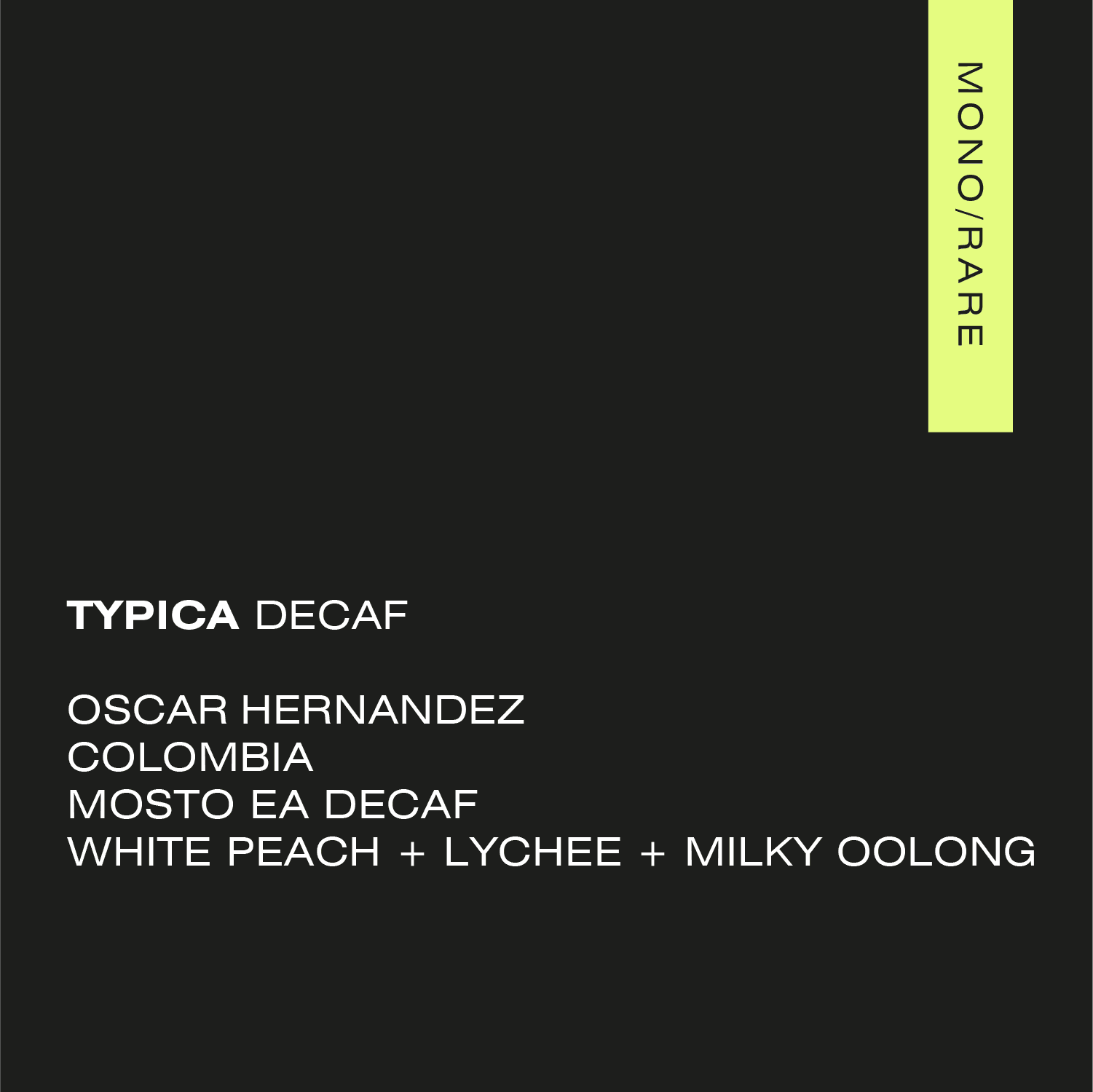
This is a Typica lot from Finca Nogales in Bruselas, Pitalito, Huila, grown at 1900 masl, picked with intention, and processed with the kind of care you normally only see reserved for competition coffees. It starts as a clean washed lot, flotation, a controlled 24 hour fermentation, washing, then slow drying on raised beds before hulling and final selection. The decaf step is where this coffee earns its place. Instead of stripping the coffee down until it tastes like an absence, the process is built to preserve clarity and texture. The beans go through repeated hot water immersion to pull caffeine out, then they rest in a natural solvent called “mosto”, derived from coffee pulp or husk, for 24 hours. After a thorough wash, the coffee dries again for around five days, bringing it back into balance without flattening the cup. The result is decaf like no other. Silky and round from the first sip, with a refined, milky oolong tea-like structure that keeps unfolding as it cools. Expect white peach sweetness up front, then a milky oolong finish that hangs around in the best way. It’s calm, aromatic, and precise, the kind of decaf you can brew at night and still feel like you’re drinking something rare and uncompromising. If you’ve been waiting for a decaf that doesn’t ask you to compromise, this is it. TYPICA DECAF vs CATURRA DECAF Both coffees are decaffeinated using the same “mosto” method from Nogales, designed to preserve sweetness, clarity, and structure. The difference is the variety and how it translates in the cup. Typica is lighter and more lifted, white peach, milky oolong tea, with a silky, tea-like finish. Caturra is slightly deeper and rounder, red grape and lychee, with a creamier, more cushiony mouthfeel.
You may also like…
Related Products
-
-
 Sale
Sale
MARAGESHA Colombia — Wilder Lazo
$ 15.58 This product has multiple variants. The options may be chosen on the product page -
-
 Sale
Sale
CATURRA DECAF Colombia – Nogales
$ 13.31 This product has multiple variants. The options may be chosen on the product page
